Grande Section is the third and final year of French école maternelle, typically for children aged 5–6. It’s the year before entering primary school and helps children transition smoothly while continuing to foster curiosity, independence, and a love of learning. In the UK, this year is roughly equivalent to the final year of preschool or reception, while in the US it aligns with the last year of Pre-K or kindergarten.
When we moved from London to Paris with our two daughters, I found myself navigating an entirely new school system. My eldest was six and had already spent a few years in the British preschool and early primary system, but my younger one was only two at the time. I thought a lot about the public vs. private school in France question, , and over the years we’ve now experienced both French public education and bilingual private schooling.
Because of that, I’ve been able to see how different settings approach the early years, and I wanted to share our experience to help other families understand what French preschool actually looks like from the inside. This article focuses on Grande Section, the final year of French preschool. While my younger daughter spent Petite Section and Moyenne Section at a public école maternelle in the 16th arrondissement (you can read about those years separately), we decided to move her to a bilingual private school for Grande Section.
Her new school is “sous contrat“, meaning it follows the official French national curriculum. So even though the environment is bilingual, the skills and competencies she learned match what children study in French public schools and other private schools under contract. The article below will give you a clearer picture of what you can expect from Grande Section in France, at the very least in terms of curriculum, and hopefully a sense of what the year feels like in reality.
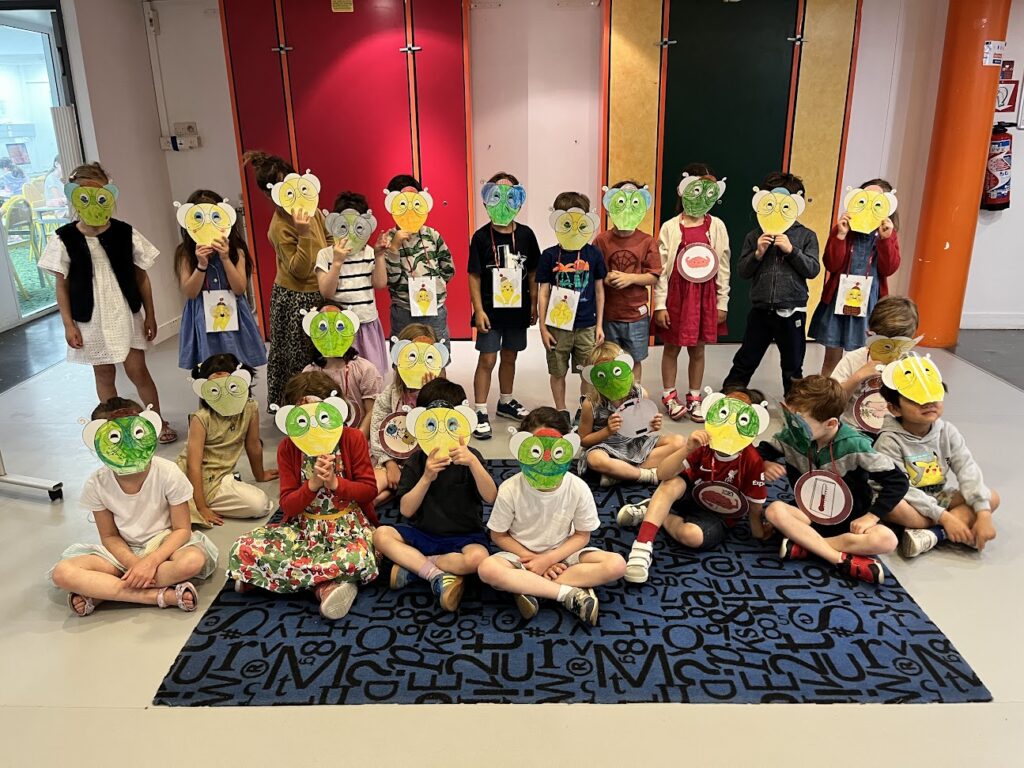
At what age does Grande Section start?
Grande Section begins in September, following the French school year calendar. Children must turn four by 31 December of that school year. This means some children may start just before turning five, while others may be closer to six.
A day in the life of a Grande Section student
A typical day starts at 8:30 am as children arrive, hang up their coats, and settle into the classroom. The morning usually combines free play, small-group activities, and early learning workshops.
Lunch runs from 11.30am to 1.30pm. Children in French public schools rarely or never bring packed lunches into school. They either eat in the cantine or go home with a parent or a caregiver before returning for the afternoon. In private schools, kids usually have a choice of eating in the cafeteria or bringing their own lunch to school. The lunch break is not just for eating, it’s also time for children to play outdoors, if the weather permits.
The school day ends between 3pm and 3:15pm. Most state schools offer after-school care (garderie) for a small fee, and families can extend the day until 4.30pm or 6pm if needed. Privately run schools typically offer after-school classes like art, music or sports for a (high) extra fee.
Wednesdays are unique in France. While some schools are closed, many have class just on Wednesday mornings. This is the day when families schedule most of the extracurricular activities. In the afternoon, public schools run centres de loisirs, offering crafts, sports, and supervised play, often in the same building as the school. Many Grande Section students end up staying a similar amount of time as on other weekdays.
Grande Section curriculum: learning through play
How reading begins in Grande Section
In our bilingual school, reading really begins on the French side. The goal is to help children feel at ease with the French alphabet and its sounds before bringing English into the mix. Some other bilingual schools in Paris teach the kids to read in both English and French at the same time. You’ll find that every school has a different approach. So in Grande Section, it’s less about reading whole words and more about getting comfortable with the building blocks of the language. The children learn to recognise letters in both capital and cursive form, and they spend a lot of time playing around with the sounds that make up French. There’s no expectation for kids to be reading by the end of the year.
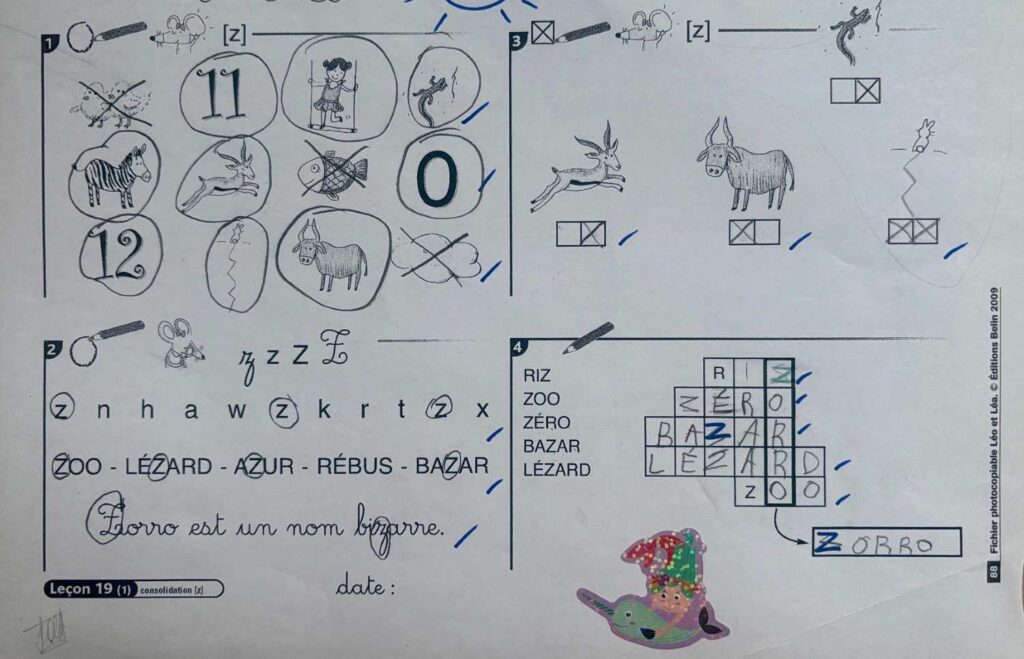
Grande Section is all about understanding how sounds work. Each week, the class focused on one sound, and the children added a new page to their little sound book. They had to come up with words using that sound, which turned the whole thing into a fun challenge. Sometimes the sound matched a single letter, sometimes not, which kept things interesting.
The teacher guided them through games and listening exercises to help them really tune in. They learned to pick out sounds, compare them, and try to reproduce them, all through hands-on activities. By the end of the year, most children have a solid sense of how sounds fit together and feel familiar with the alphabet. Actual reading will kick off next year in CP, but Grande Section gives them a gentle start that feels very manageable.
Even though they aren’t reading on their own yet, families are encouraged to keep reading with their children. At school, books circulate throughout the year, and the class votes on their favourite. My daughter’s class even had a children’s author visit to read a story they had written, which was a lovely highlight.
Early writing skills
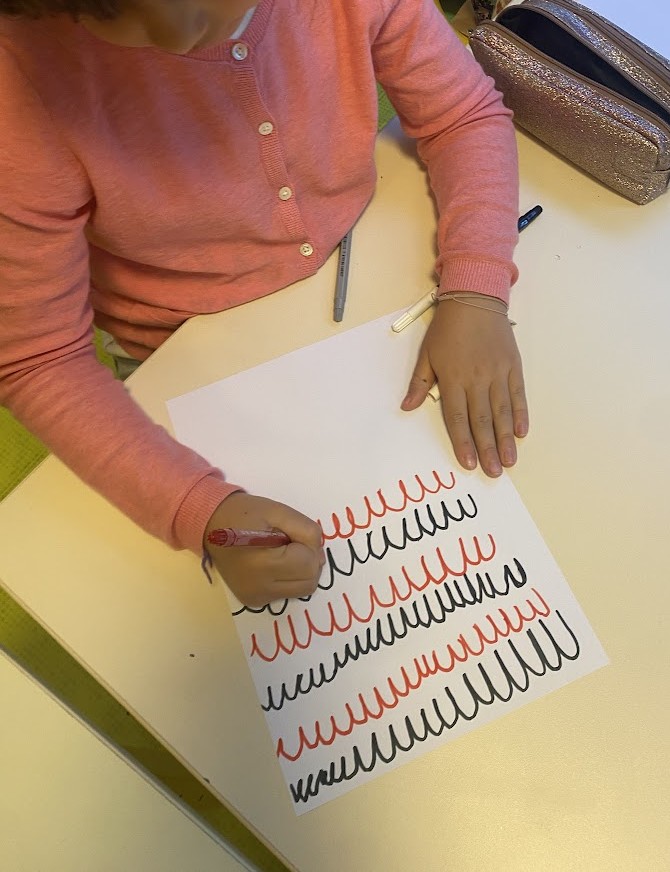
Grande Section is when writing really begins to take shape. Instead of jumping straight into cursive, the children spend a lot of time working on the movements behind the letters, getting the rhythm and flow right before anything else. In our daughter’s class, that meant plenty of loops, circles, tracing patterns, and even working with playdough to strengthen those tiny finger muscles.
Once they’ve mastered a good pencil grip, they slowly start learning how to write the alphabet in cursive and begin linking letters together. They practise with short, simple words like es, est, il, and elle, and they also learn to write their own name in cursive, which always feels like a big achievement.
It’s still very much a preparation year. CP is when formal writing truly begins, but Grande Section lays the groundwork gently so the children can start that next step with confidence.
Building early maths skills
Maths in Grande Section is very hands-on and playful, while also introducing real concepts. Children begin to work with numbers beyond 10, often going up to 20 or even 30. They learn that numbers can represent both a quantity and a position, like first, second, or third. Simple word problems help them understand ideas like adding, taking away, or dividing a group of objects.
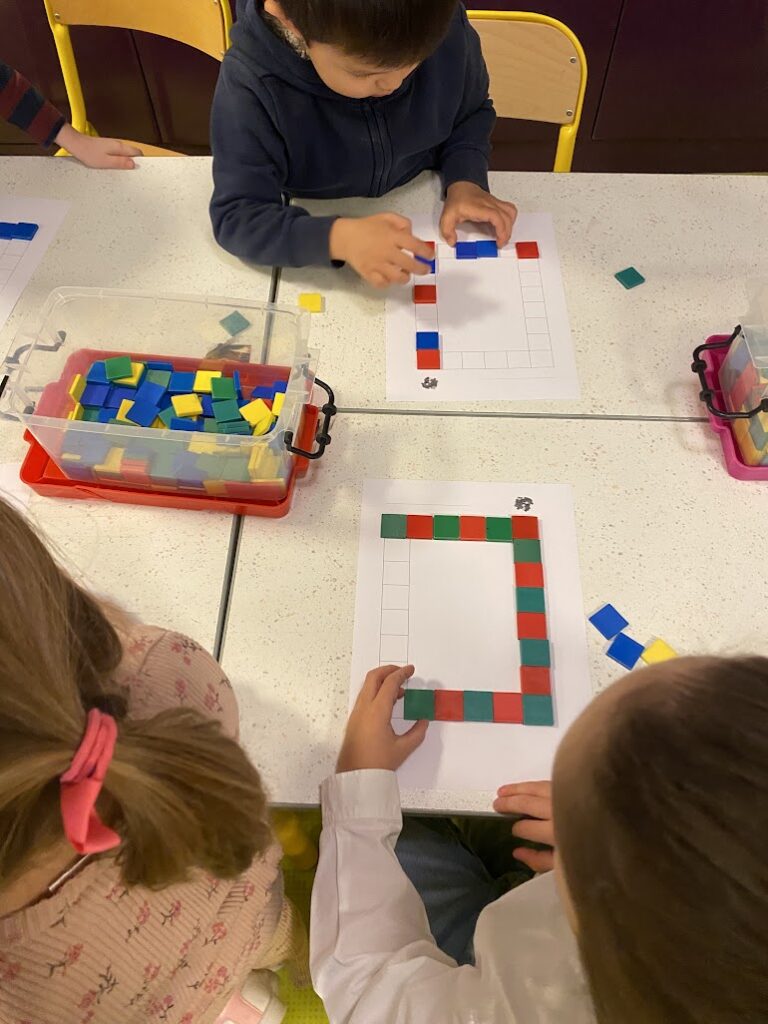
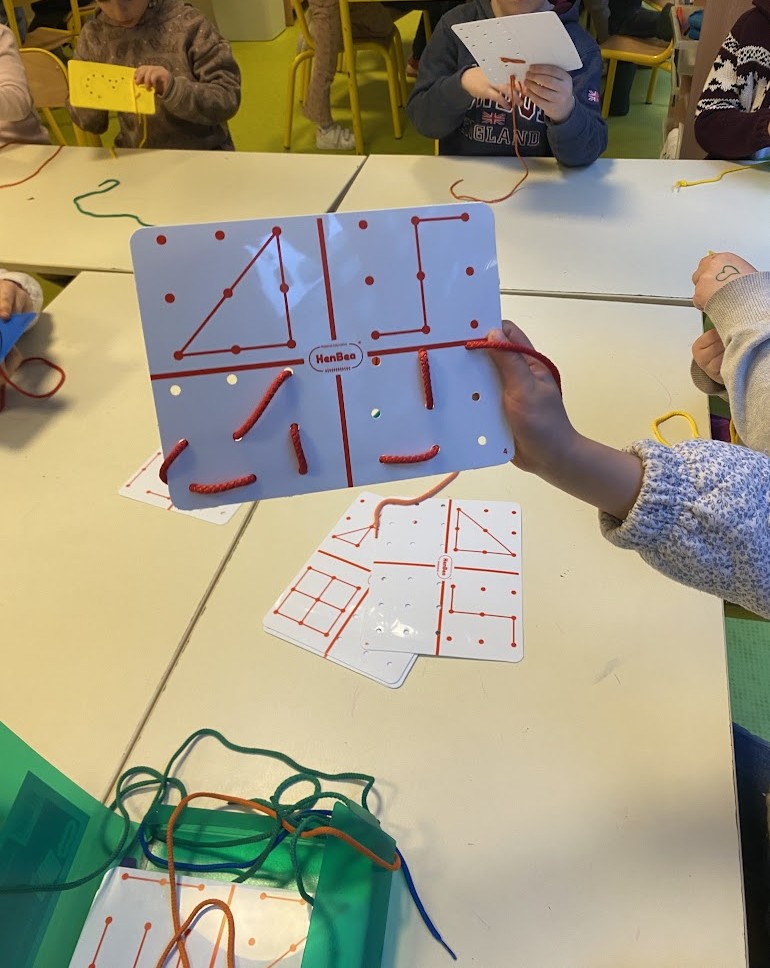
In our daughter’s class, maths often felt like a game. They used dice to recognise numbers without counting each dot, and coloured tiles to practise counting specific quantities. Loto games and other activities helped them put numbers in order up to 20, while experimenting with triangles led to discovering how shapes can combine to form squares, rectangles, and trapezoids.
Hands-on exploration continued with fractions. The children cut materials to understand halves and wholes, piecing them back together in a fun way. They also explored 3D shapes such as cubes, cones, and cylinders, and practised sorting objects into different categories to strengthen logical thinking.
By the end of Grande Section, children are able to classify objects by shape, recognise both solids and plane shapes, draw simple shapes, and continue patterns they observe. These playful, hands-on activities give them a strong foundation in numbers, geometry, and problem-solving.
Exploring science and the natural world
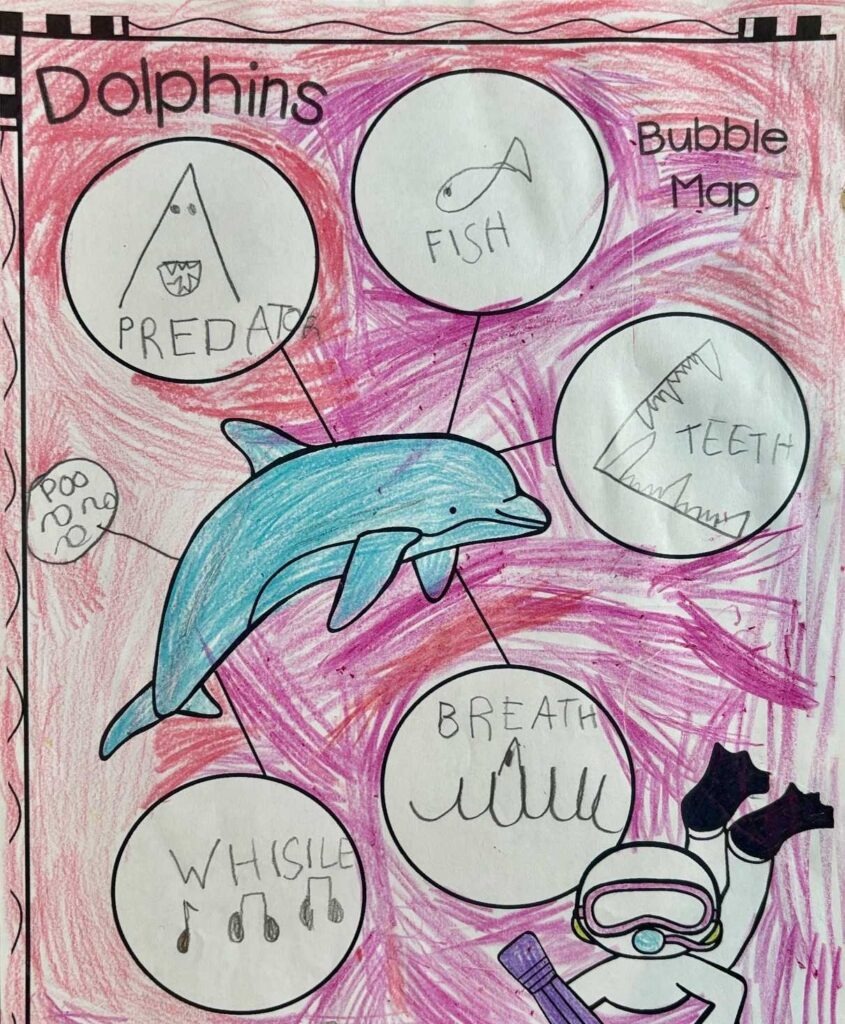
In Grande Section, science is all about curiosity and hands-on discovery. Children get to observe plants and animals, learning about life cycles, from birth and growth to reproduction and aging. In our daughter’s class, they explored woodland animals, finding out about their habitats, diets, and characteristics through stories, poems, songs, and nonfiction fact files. They also practised grouping animals by features like fur, feathers, or scales, as well as by how they move – walking, crawling, flying, or swimming.
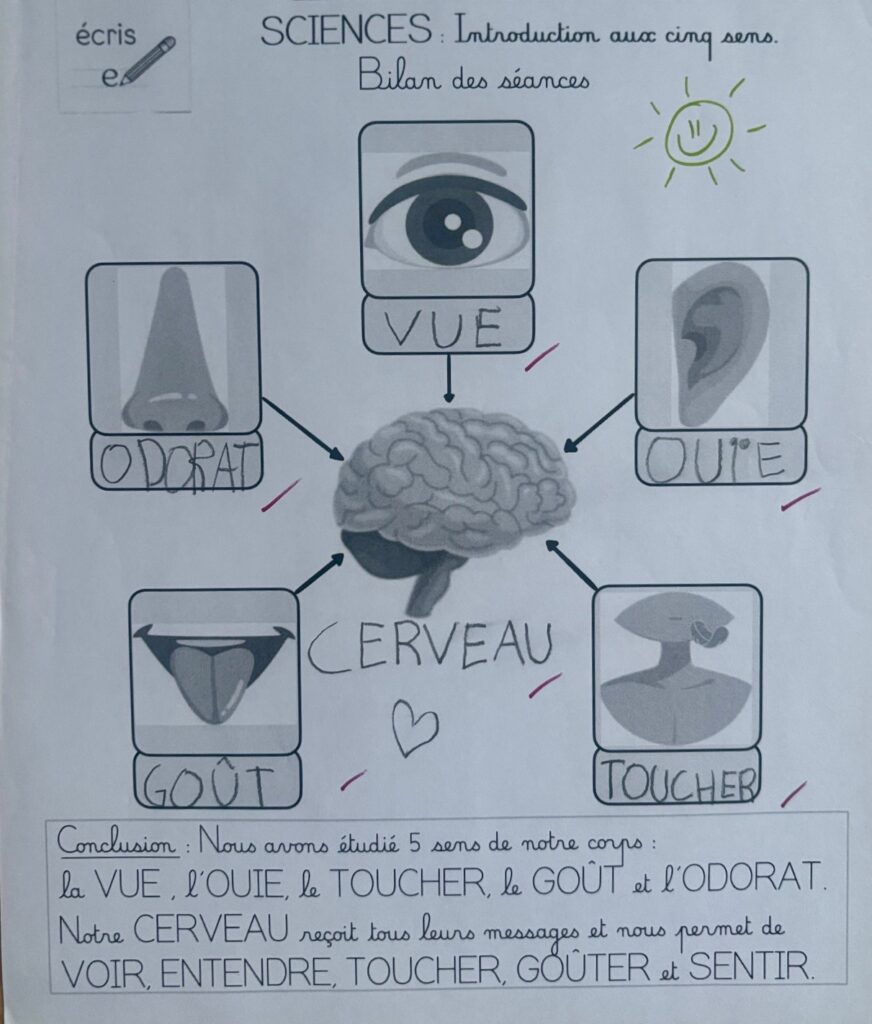
The class includes plenty of sensory experiments and human body exploration too. One memorable activity tested their sense of smell, where teams had to identify scents like coffee, clementine, and onion. They also made a model lung to see how the diaphragm works and investigated how bile breaks down fat, before moving on to learn about the skeleton.
By the end of Grande Section, children can describe the main stages of animal and plant development, recognise the basic needs of living things, locate and name parts of the human body, and learn to practise personal hygiene. These activities help them observe, compare, classify, and reason, giving them a strong foundation in science for when they move into primary school.
School outings in Grande Section
One of the things I’ve always loved about French schools is how much learning happens outside the classroom. In all school years, school outings ( or “sorties”), play a big role in helping children connect what they learn at school with the world around them.
Our daughter’s class had some fantastic outings. One of the them was to the Science Museum, which (in my opinion) happens to be one of the Best Museums in Paris for Kids. I’ve actually written a separate post about La Cité des Enfants that you can read here. On this particular school trip, the kids explored interactive science exhibits and games designed for younger kids.
Another favourite was EcoPark Meudon, where the children developed their motor skills, self-confidence, and teamwork while exploring the forest. They learned about the local flora and fauna, spotting different plants and animals, and discovering how nature works, sometimes climbing, balancing, or navigating small trails, all under the careful guidance of their teachers.
They also visited the Maison des Histoires, a lovely space for kids at the back of the Chantelivre bookstore in Paris (I mention other bookstores to explore with kids here). The children dressed up, played in the soft play area, and listed to storytellers bring stories to life.
Explore More About Schools in France
If you’re interested in learning more about the French education system for children, here are some other posts to check out:
How to Enrol Your Child in a French School — Step-by-step advice on registration, and the paperwork involved.
Petite Section: Preparing for Primary School — A guide to the first year of école maternelle (ages 3–4), including daily routine and learning through play.
Moynne Section: The Second Year of French School — A guide to the second year of école maternelle (ages 4–5), including daily routine and learning through play.
Overview of École Maternelle — Understanding how French pre-primary school works: its structure, philosophy, and importance.
French School Holidays & Calendar — A breakdown of the school year in France, including term dates and holiday planning for families.
Bilingual & International Schools in France — Options for multilingual families: how to choose, how they differ from state schools.
Disclosure: This post contains affiliate links and I receive a commission if you visit a link and buy something on my recommendation. Purchasing via an affiliate link doesn’t cost you any extra, and I only recommend products and services I trust. All opinions are my own. As an Amazon Associate I earn from qualifying purchases. For more details see my disclaimer and privacy policy.