French preschool begins with Petite Section, the first official year of école maternelle in France, welcoming children aged 3–4. In the UK, this is similar to nursery, and in the US it aligns with preschool or Pre-K. Petite Section introduces children to structured school routines while keeping the emphasis on play, creativity, and early developmental skills.
What is Petite Section in France?
The Petite Section marks the beginning of your child’s formal education journey in France. It is also the first year of what the French call École Maternelle (Pre-Primary School in the UK or Pre-K / Kindergarten in the USA), composed of three grades – Petite Section, Moyenne Section, and Grand Section. Unlike in the UK and the US, children in France must attend preschool from the age of three.
The schools offer a playful introduction to structured learning, where emphasis is placed on social interaction, creativity, and early developmental skills. Rather than academic pressure, the goal is to help children adjust to a group setting, follow routines, and explore the world around them through play.
When do children start Petite Section?
Petite Section starts in September, following the French school year calendar. Children must be three years old by December 31 of that school year. This means some start just before turning three, while others are closer to four.
In our experience, my daughter adapted remarkably quickly. She didn’t speak French at all at the beginning, yet by the end of the year she was reciting stories in French from memory. At this age, children truly are like sponges when learning new languages.
A typical day in Petite Section
Daily life in Petite Section follows a predictable rhythm that helps 3-year-olds feel secure. Here’s what a typical school day looks like:
Morning routine
The school day usually starts around 8.30 am, when children arrive, hang up their coats and backpacks, and begin a mix of free play and structured activities.
Lunchtime and nap
Lunch generally takes place between 11.30 am and 1.30 pm. Children either eat in the cafeteria or go home for lunch. After lunch, children usually have a nap or quiet rest time for 1–2 hours, often with a favorite stuffed toy, or doudou, to help them settle.
Afternoon activities
After rest, children return to classroom activities. The school day typically ends between 3pm and 3.15 pm, but state schools offer after-school care until 4.30 pm or even 6 pm for a small fee.
Wednesdays
In France, Wednesdays are treated differently: some schools have a half-day of classes, while public schools provide afternoon centres de loisirs (extracurricular activities) in the same building. Private schools may offer similar activities but usually finish earlier and are more expensive.
Learning through play: Petite Section curriculum
The main goal of Petite Section is to instill a love of learning, foster curiosity, and help children develop independence. Learning is almost entirely play-based, allowing children to explore, problem-solve, and memorize new concepts naturally.
Independence and communication
French preschools also place a strong emphasis on developing independence in children. Children practice dressing themselves, fastening buttons, and tidying up toys. They also take on small responsibilities in the classroom, encouraging self-confidence and autonomy.
Oral language skills grow rapidly. Children listen to stories, retell them in their own words, and learn simple poems. Vocabulary expands naturally through activities and daily routines.
Maths and cognitive skills
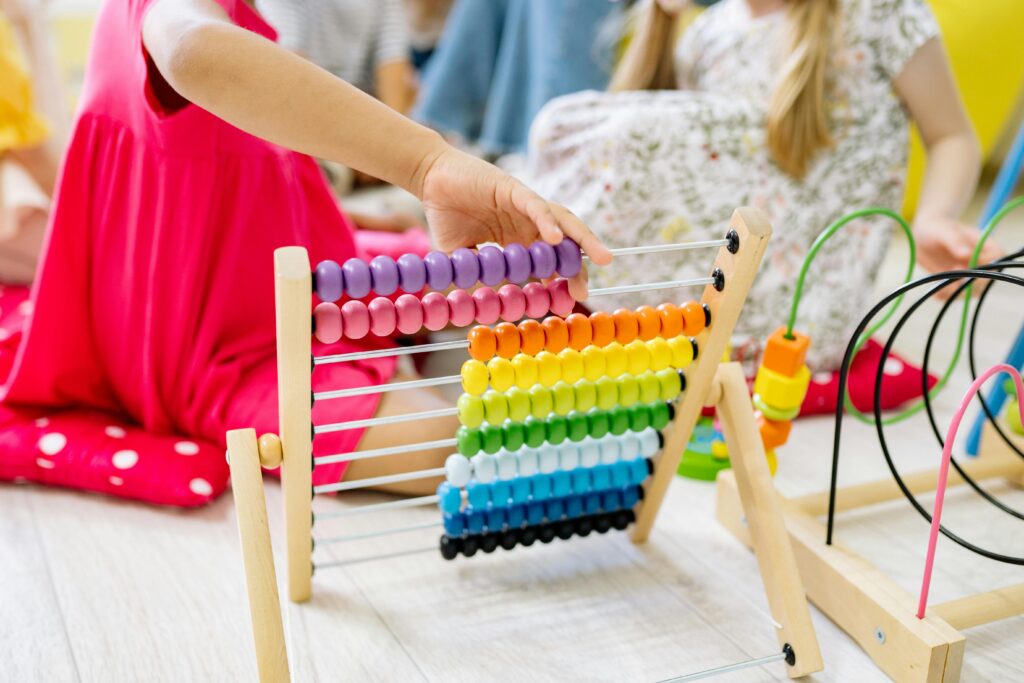
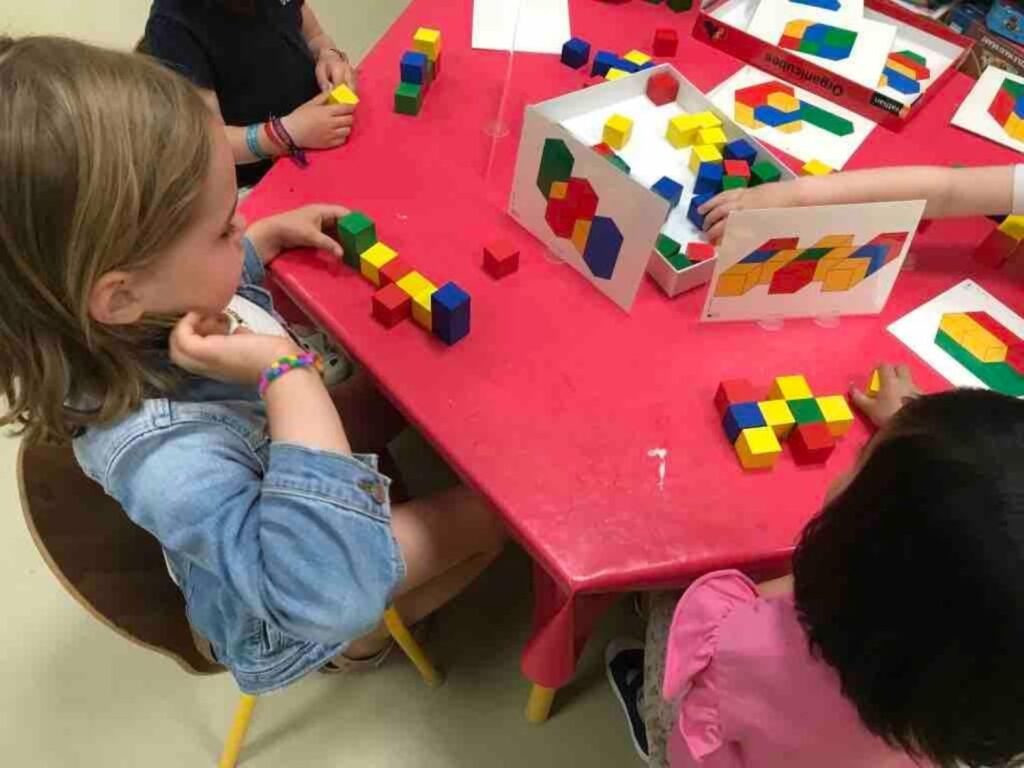
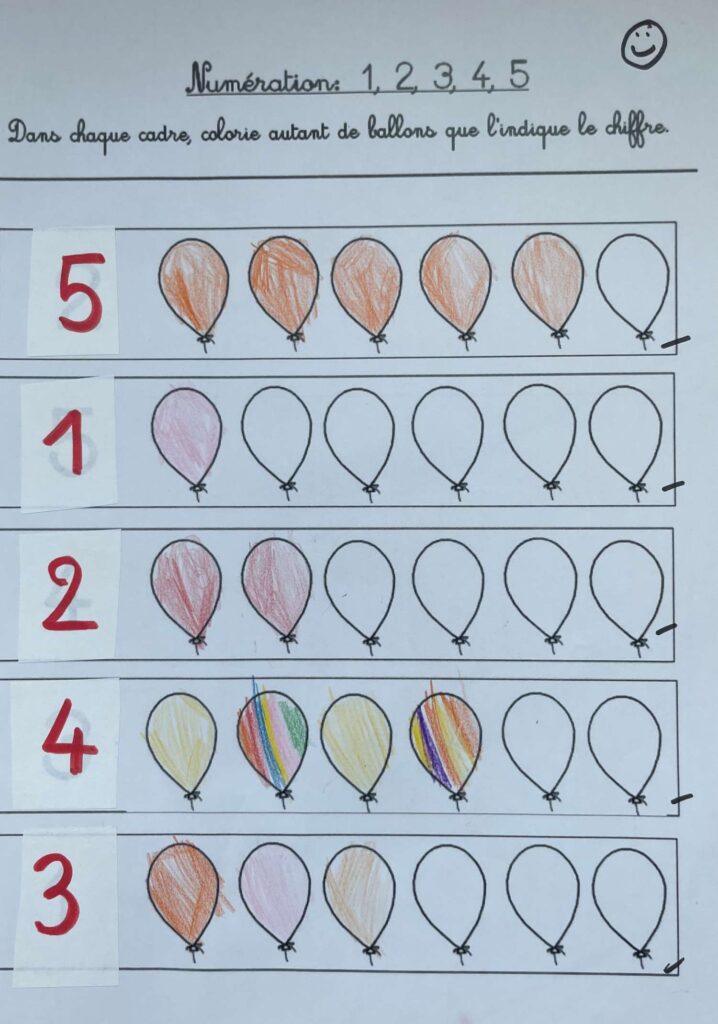
Through games and storytelling, children learn basic shapes, numbers, and quantities. In my daughter’s class, they matched numbers with corresponding quantities, arranged them in ascending order, and classified items based on size. Storytelling, such as the tale of Goldilocks and the Three Bears, helped children understand concepts like “more than,” “too much,” “as many as,” and “the same number.” Additionally, they explored geometric vocabulary and the properties of simple shapes.
Writing
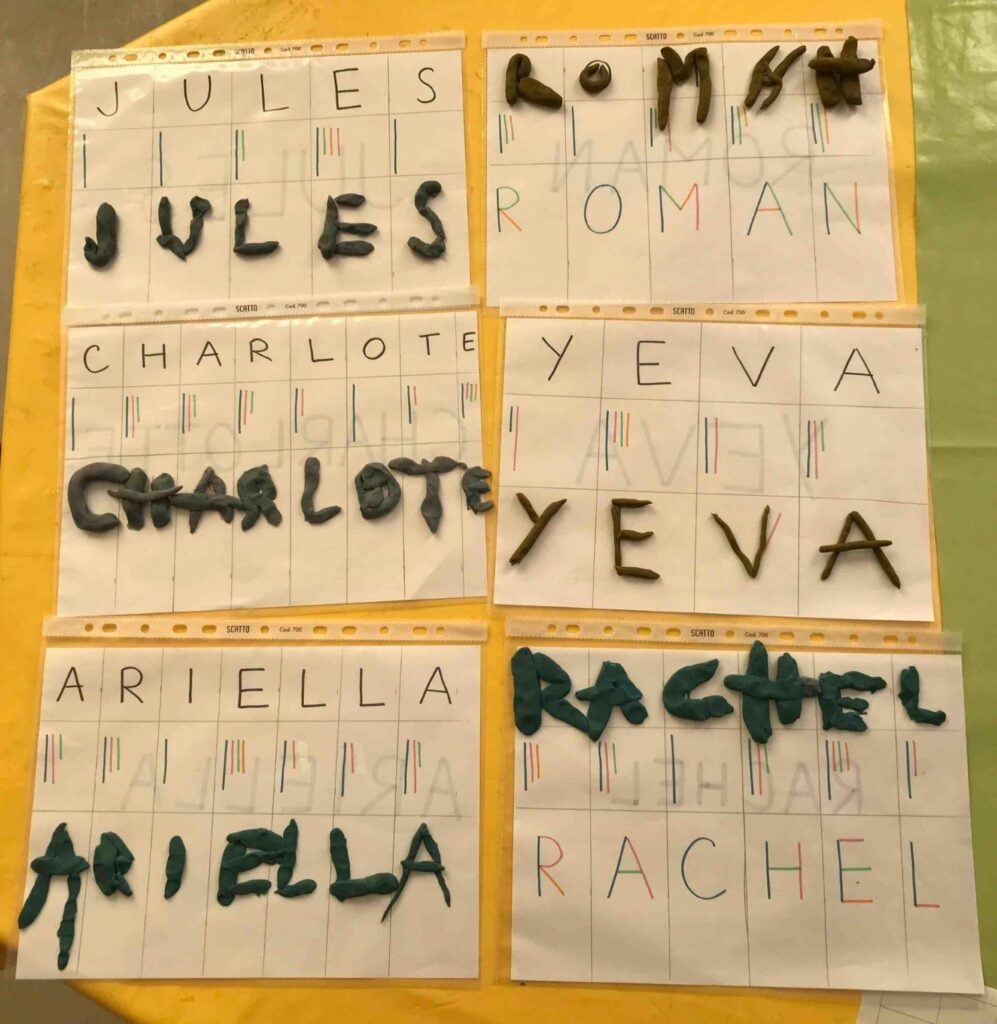
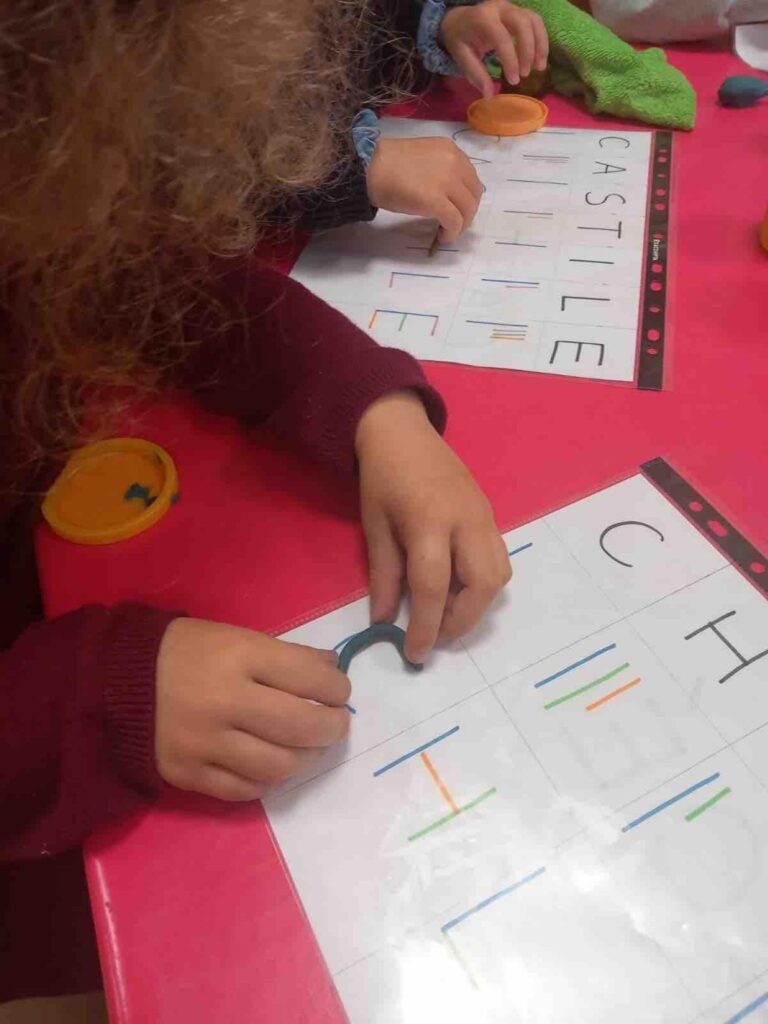
Children are taught proper pencil grip and practice drawing horizontal lines from left to right, in alignment with the direction of writing. They also learn to model and write their first names in capital letters using various mediums such as clay, sand, felt-tip pens, or colored pencils. By the end of the school year, the goal is for all students to write their first names in block capitals. Additionally, they practice writing other words in capital letters.
Storytelling and poem recitals
The teacher reads stories to the class and encourages the children to retell them in their own words. The kids also learn short poems throughout the year and recite them on special occasions like Mother’s Day and Father’s Day.
Arts and crafts
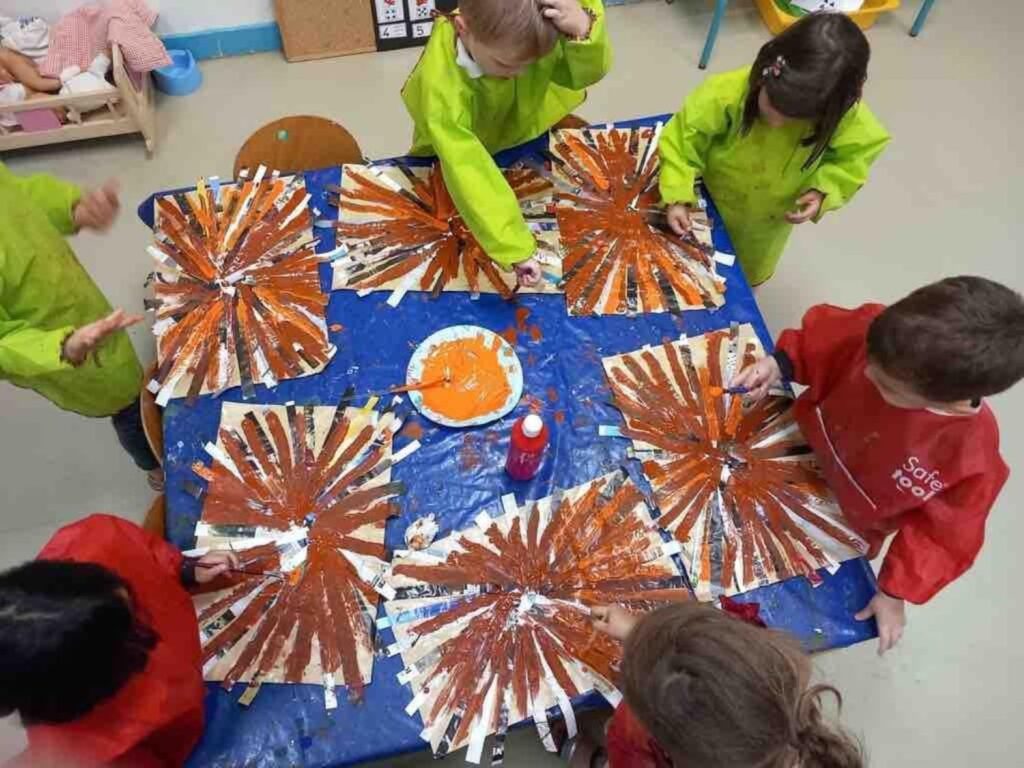
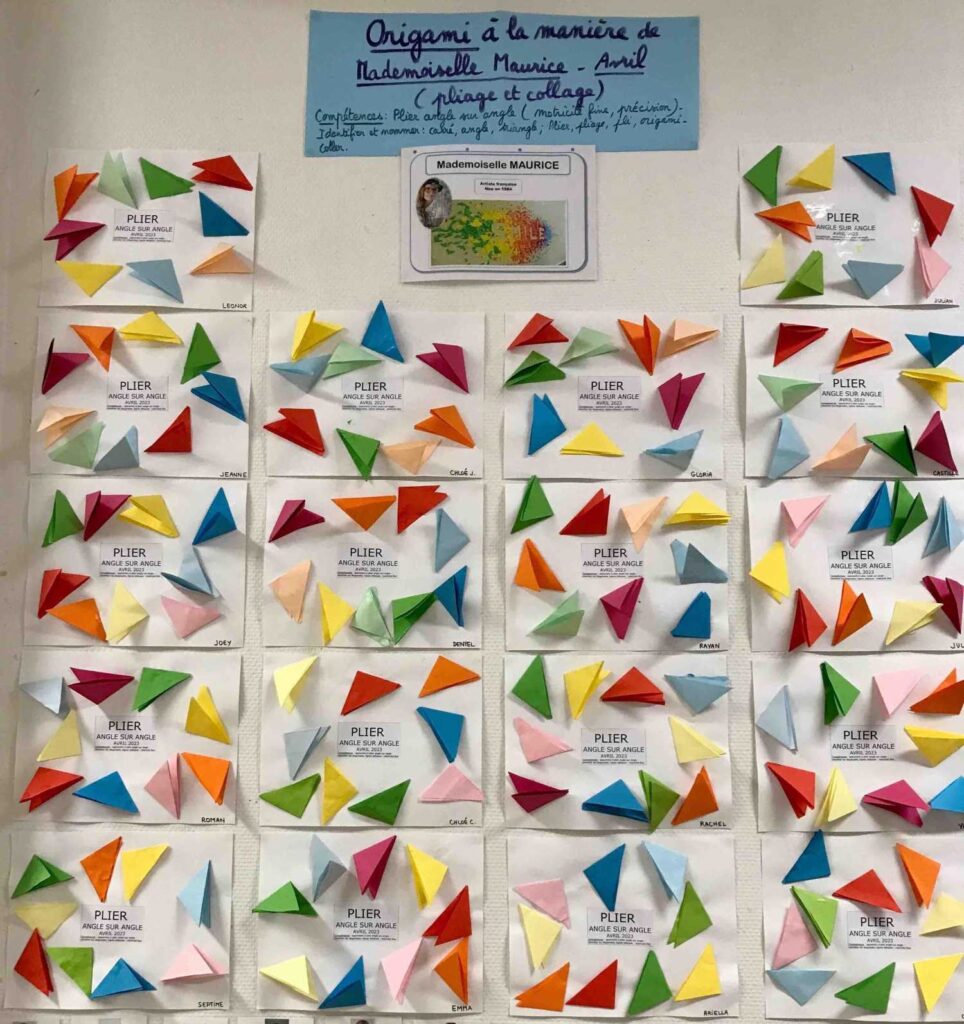
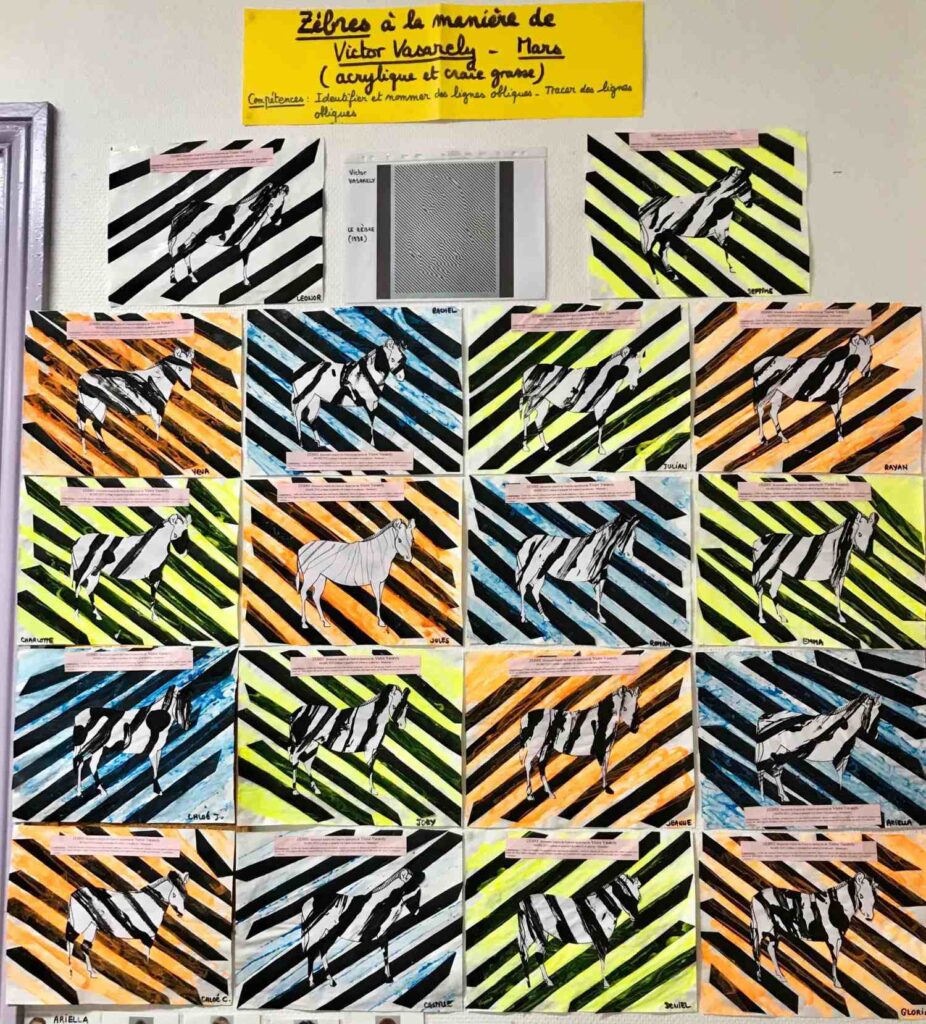
Arts played a significant role in the students’ learning this year. The kids engaged in a lot of drawing, painting, and crafting, unleashing their creativity with colorful masterpieces. As well as teaching kids to use scissors and glue, they introduced the kids to various renowned artists and encouraged them to mirror their work through their own creations.
Gardening
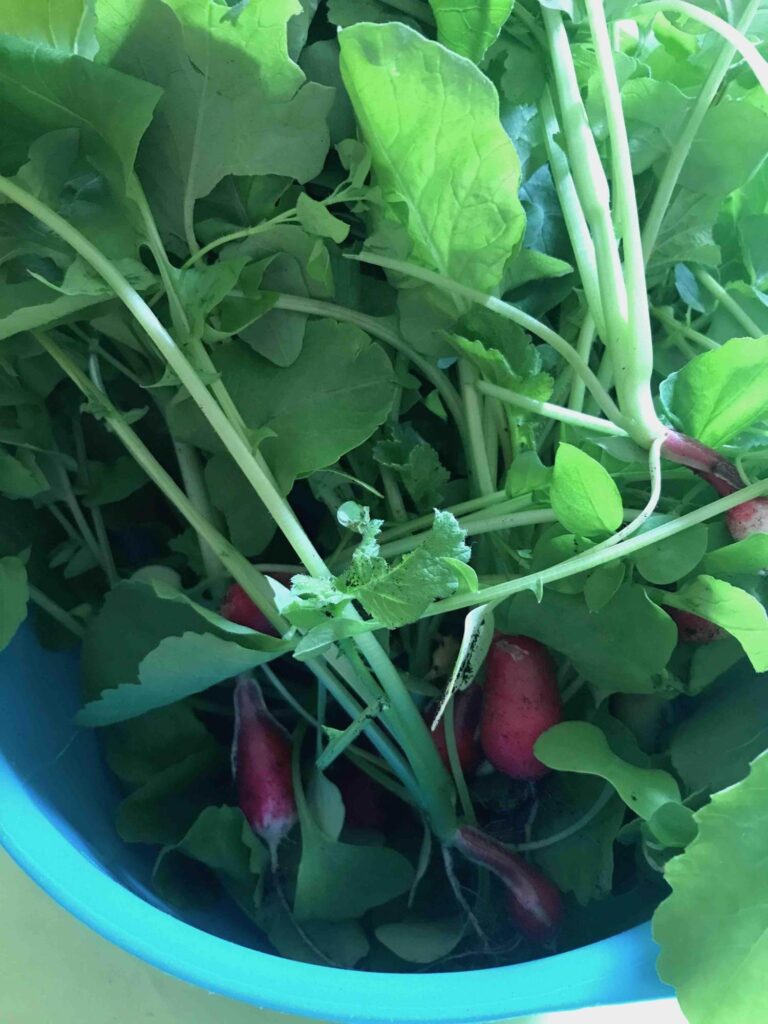
With the arrival of spring, outdoor activities take center stage, and children spend time exploring the world of gardening. They planted and nurtured radishes in the spring, discovering vocabulary related to plants and gardening tools.
In May, the kids harvested the radishes and tasted them with a small slice of buttered fresh baguette and a little bit of salt. Hmmm!
After planting pebbles, shells, and coffee beans into the ground, they experimented and discovered that these were not seeds. This provided another opportunity to learn what a seed is and how different seeds yield different plants.

Cooking
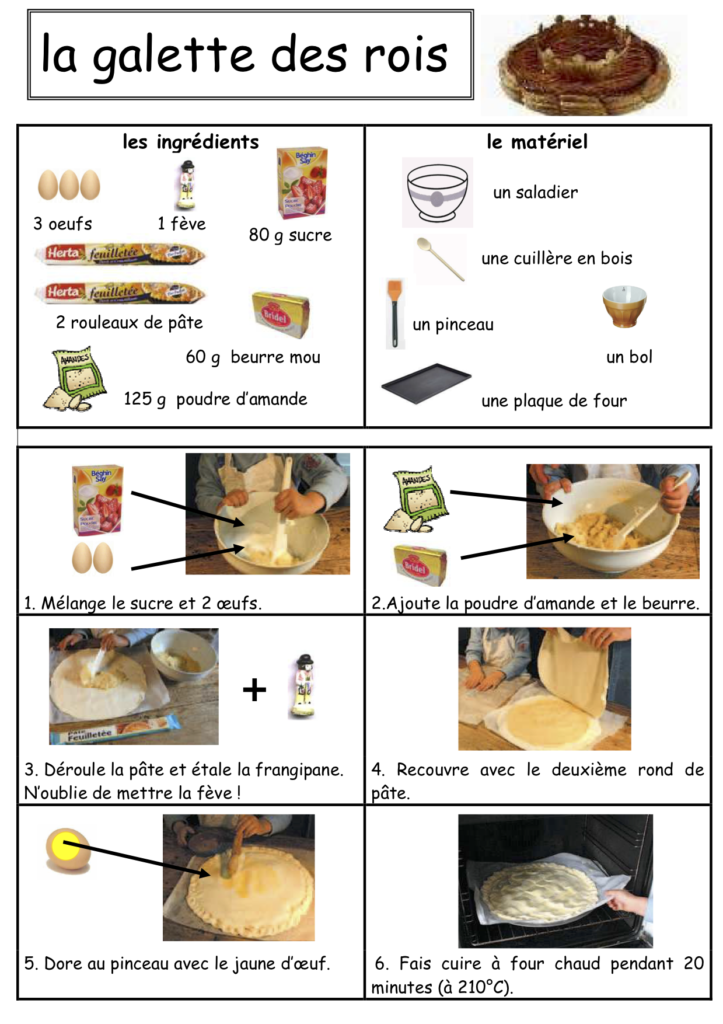
The kids learned what a recipe is and had a go at cooking traditional French food like crepes and galette des rois (a puff pastry cake).

School outings in Petite Section
At our school in Paris, the Petite Section class visited the local library every couple of months for storytelling and to borrow books. There were also cinema outings, a trip to the local modern art museum, and a visit to the zoo, an hour outside of Paris.

Interaction with parents
In my daughter’s class, we were fortunate to have a teacher who shared weekly updates. There was an online platform where parents could read about the kids’ activities, complete with many photos accompanying the week’s diary. Not all teachers dedicate time to this so we were lucky to be able to have this platform.
Parents are invited to watch Christmas and end-of-year performances featuring traditional singing and dancing.
At the end of the year, teachers provide parents with a report card called the Carnet de suivi des apprentissages (“Learning Logbook”). The school keeps it and passes it on from one year group to the next. It is an observation book filled in by the teacher to monitor learning throughout the year, with a brief summary of academic achievements.
Our experience with Petite Section
My daughter’s first year at French preschool was excellent. I’m delighted with how the school organized teaching and communication with parents. Compared to my elder daughter’s UK private school experience at the same age, this one is broadly similar. The only difference is the cost! We might have been fortunate, but this year’s experience boosted my confidence in the French public school system. Let’s wait and see what the next year brings.
Explore More About Schools in France
If you’re interested in learning more about the French education system for children, here are some other posts to check out:
How to Enrol Your Child in a French School — Step-by-step advice on registration, and the paperwork involved.
Moynne Section: The Second Year of French School — A guide to the second year of école maternelle (ages 4–5), including daily routine and learning through play.
Grande Section: Preparing for Primary School — What to expect in the final year of preschool before CP (first year of primaire).
Overview of École Maternelle — Understanding how French pre-primary school works: its structure, philosophy, and importance.
French School Holidays & Calendar — A breakdown of the school year in France, including term dates and holiday planning for families.
Bilingual & International Schools in France — Options for multilingual families: how to choose, how they differ from state schools.
Disclosure: This post contains affiliate links and I receive a commission if you visit a link and buy something on my recommendation. Purchasing via an affiliate link doesn’t cost you any extra, and I only recommend products and services I trust. All opinions are my own. As an Amazon Associate I earn from qualifying purchases. For more details see my disclaimer and privacy policy.