If you’re wondering whether the Amalfi Coast is suitable for kids, I want to give you an honest answer and not the one most travel blogs give you.
I visited the Amalfi Coast with my husband, without the children. But I’m a mum, and I couldn’t switch that off. The whole time I was there, I was quietly assessing everything through a parent’s lens — the terrain, the beaches, the crowds, the restaurants, the roads. Could I do this with the kids? Would this work with a stroller? Where are all the families? That last question is telling in itself. I didn’t see many. And on one of Europe’s most visited coastlines in peak season, that absence says something.
So here is my genuinely honest assessment — what the Amalfi Coast is like for families, why I’d suggest waiting until your children are a little older, and what to do when you do finally go.
Where is Amalfi Coast?
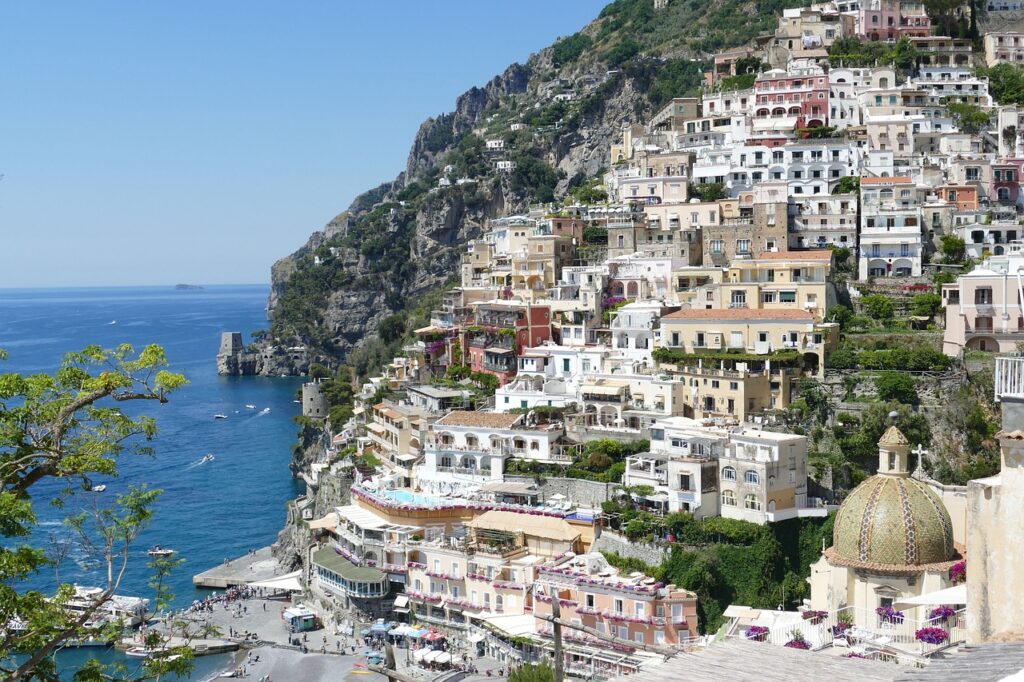
The Amalfi Coast is a 50-kilometre stretch of dramatic coastline in the Campania region of southern Italy, on the southern side of the Sorrentine Peninsula facing the Gulf of Salerno. It is a UNESCO World Heritage Site and one of Italy’s most visited destinations.
There are 13 towns and villages along the coast: Positano, Amalfi, Ravello, Furore, Conca dei Marini, Scala, Tramonti, Praiano, Vietri sul Mare, Atrani, Cetara, Maiori and Minori. Each is perched on the cliffs, with the kind of views that make you understand immediately why people keep coming back.
The nearest major city and transport hub is Naples, though as I’ll explain below, I’d recommend basing yourself on the coast rather than in Naples itself.
The Honest Challenges: Amalfi Coast with Kids
This is the section most travel blogs skip. They show you the beautiful photos and the gelato and the turquoise water and they don’t tell you about the 200 steps to get back to your hotel, or the stroller you’ll end up carrying more than pushing.
I watched other tourists navigating these challenges when I was there. Here’s what families are actually dealing with.
1. Stairs, Stairs, and More Stairs
This is the single biggest challenge for families with young children, and it cannot be overstated. The towns on the Amalfi Coast are built vertically into cliffsides. Getting anywhere — to the beach, to a restaurant, to your hotel room — almost always involves stairs. Long, steep, uneven stairs. I watched people attempting it with strollers and it was genuinely hard going. You will carry your stroller far more than you push it. If you have a baby or toddler, factor this in completely.
The towns vary in how challenging they are — Positano and Praiano are particularly steep, while Maiori and Minori are flatter and more manageable with young children.
2. The Beaches Are Pebbly — Not Sandy
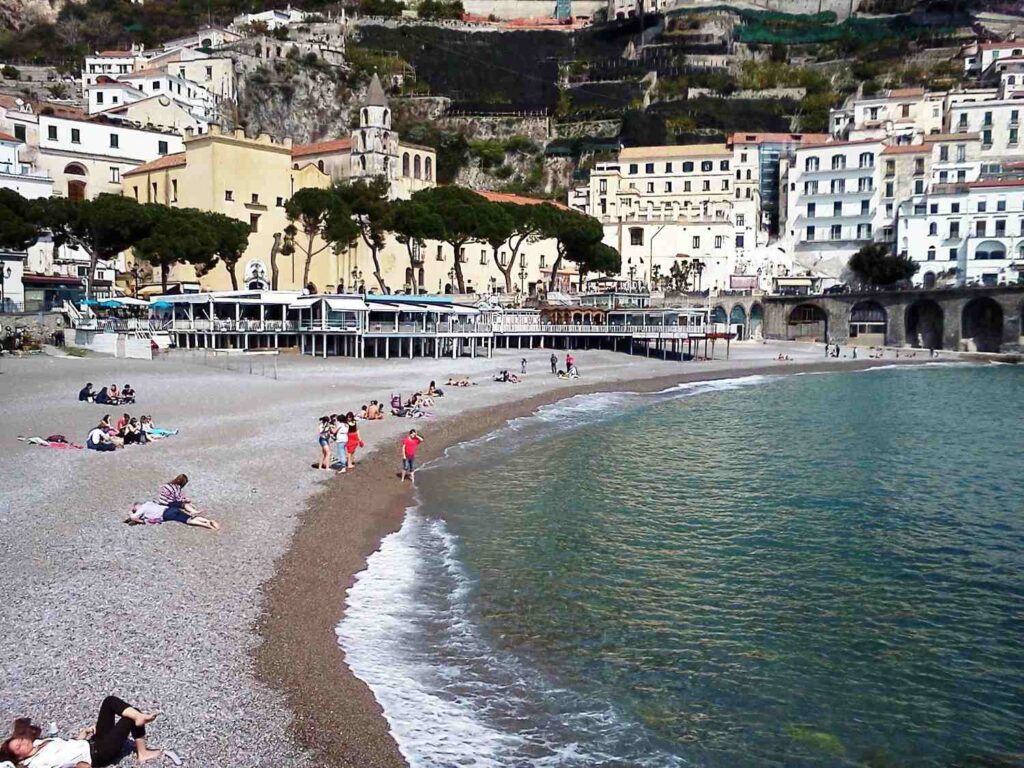
If you’re imagining your toddler playing happily on a sandy beach while you sip an Aperol Spritz, adjust that expectation now. The beaches on the Amalfi Coast are pebbly, and the water gets deep quickly making them unsuitable for young children without very close supervision. Water shoes are absolutely essential for everyone. The rocks heat up significantly in the sun and are painful on bare feet.
The crowds on the beaches in summer are also intense. Public beaches are packed, and the combination of pebbles, deep water, and wall-to-wall tourists makes them a stressful rather than relaxing experience with small children.
3. The Heat
Summer temperatures regularly exceed 30°C, and walking around — particularly uphill, which is unavoidable — in that heat with young children is genuinely exhausting. Carrying a baby in a carrier in that temperature is uncomfortable for both of you. If you’re visiting with young children, avoid July and August if at all possible. Late May, early June, and September are significantly more manageable.
4. The Roads and Motion Sickness
The main coastal road is narrow, winding, and extremely busy in summer. If your children are prone to motion sickness, bus or car journeys between towns will be unpleasant. Even children who don’t normally get carsick can struggle on these roads. The ferries are a much better option for getting between towns — more comfortable, more scenic, and no winding roads. More on this below.
5. The Crowds
Between May and September, every town on the Amalfi Coast is crowded. During the day, when day-trippers arrive from Naples and beyond, the narrow streets become extremely busy. Navigating this with a stroller or young children in tow is challenging and, frankly, not much fun.
When I was there, I noticed very few families with young children among the crowds. Most visitors were couples or groups of adults. That observation alone reinforced my view that this destination is better suited to older children who can navigate busy spaces independently.
6. No Dedicated Attractions for Young Children
There are no theme parks, no dedicated kids’ activities, no playgrounds to speak of. The Amalfi Coast’s appeal is its beauty, its food, its history, and its outdoor activities — all of which require a certain age and attention span to appreciate. If your children need structured entertainment, you won’t find it here.
7. Restaurants and Food
Children’s menus are rare on the Amalfi Coast. You’ll likely be ordering adult-sized portions for your children and paying adult prices — and restaurants here are not cheap. A typical meal costs around €50 per person. The saving grace is that pizza, pasta, and gelato are always available and reliably excellent — and most children are happy with that.
What to Do on the Amalfi Coast with Kids: The Best Activities
If you’re visiting with children aged 8 and above, here is what I’d prioritise.
Take a Private Boat Tour
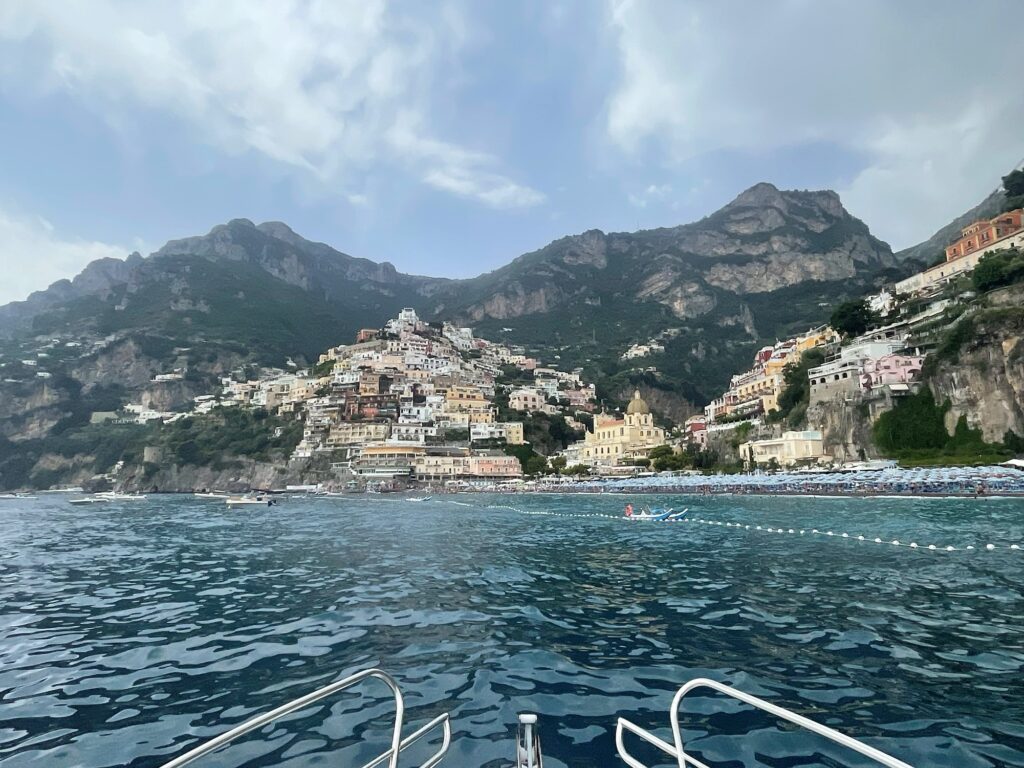
This is, without question, the highlight of any Amalfi Coast visit — with or without kids. Seeing the coastline from the water is a completely different experience from seeing it from the road, and children tend to absolutely love it.
You can rent a private boat for a few hours to explore sea caves, swim in hidden coves, and snorkel along the coast. The boats have life jackets and inflatables for children or anyone who isn’t a confident swimmer. Expect to pay around €300 for a two-hour private boat tour — it sounds like a lot, but split across a family it’s one of the best-value experiences on the coast.
One of the unexpected highlights of a private boat tour is the restaurants you can only reach by water. We stopped for lunch at Ristorante La Tonnarella in Conca dei Marini — a restaurant with a remarkable history. Jacqueline Kennedy visited with her sister and children in the summer of 1962, and the restaurant still serves the spaghetti with courgettes she loved, now known as Spaghetti Jacqueline Style.
Day Trips to the Towns
Rather than trying to base yourself in multiple locations, pick one town as your base and do day trips from there. One town per day is plenty — the walking, the heat, and the hills mean that trying to cram in too much leaves everyone exhausted.
Getting between towns: ferries are the best option with kids. They’re affordable, frequent, scenic, and avoid the winding coastal roads entirely. If you choose your base for its ferry connections, Positano and Amalfi are the best-connected towns.
The towns worth visiting with older kids:
Positano is the most photographed town on the coast — pastel-coloured houses cascading down the cliff to the sea, narrow streets full of shops and galleries. It’s steep and busy, but stunning. Check out Fornillo beach (slightly quieter than the main beach) and the beautiful church of Santa Maria Assunta.
Amalfi sits at the heart of the coast and has a livelier, more accessible feel than Positano. The Duomo di Sant’Andrea with its elaborate mosaics is worth a visit, and the Museum of Paper (Museo della Carta) is genuinely brilliant for kids — they can learn how paper was traditionally made in Amalfi and see the original machinery.
The best gelato we found on the entire coast was in Amalfi — at Pasticceria Andrea Pansa right by the Duomo, with local flavours of lemon and almond. Don’t leave without trying it.
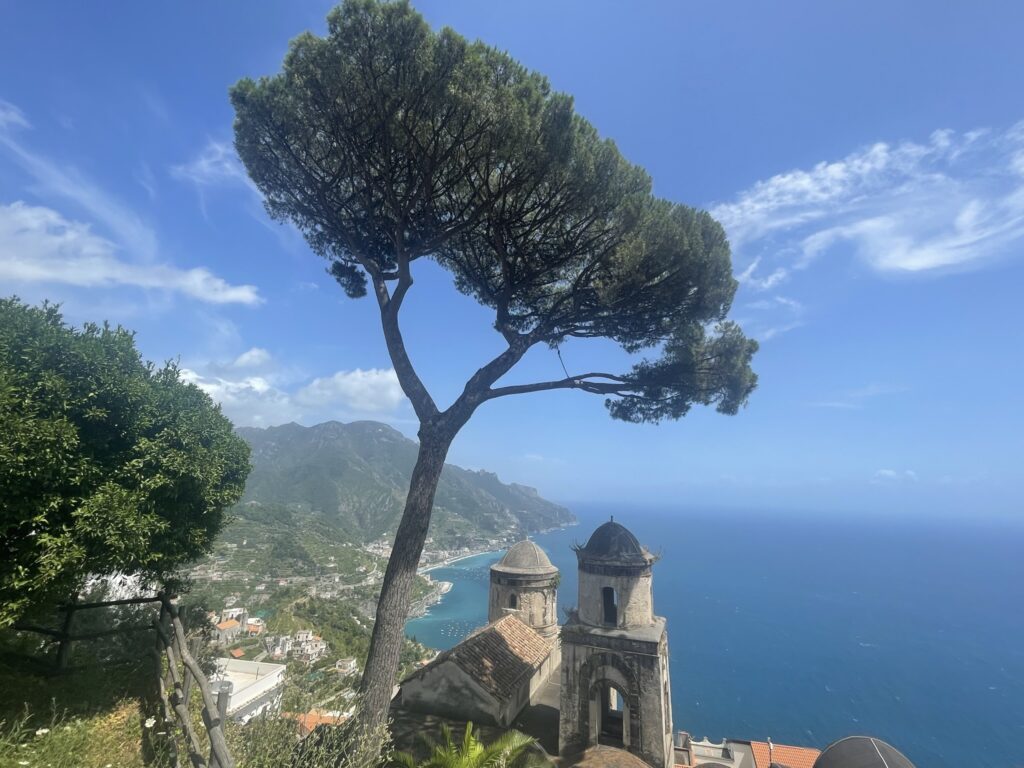
Ravello is perched high above the coast and has a completely different, quieter atmosphere. It can’t be reached by ferry — take the bus from Amalfi (about 20 minutes) or drive. The Villa Cimbrone and Villa Rufolo gardens are the highlight — beautifully landscaped with breathtaking views of the coastline below, and plenty of shade, which makes them a welcome relief in the summer heat. Both villas are about 15 minutes walk from each other and are best combined in a single visit.
Maiori and Minori are smaller, less visited, and significantly flatter than the more famous towns — which makes them the most manageable with younger children. Worth including if you want a slower, less crowded day.
A Day Trip to Capri
If you’re spending more than a few days on the Amalfi Coast, a day trip to Capri is absolutely worth it. The ferry from Positano takes about 25 minutes; from Amalfi, around an hour.
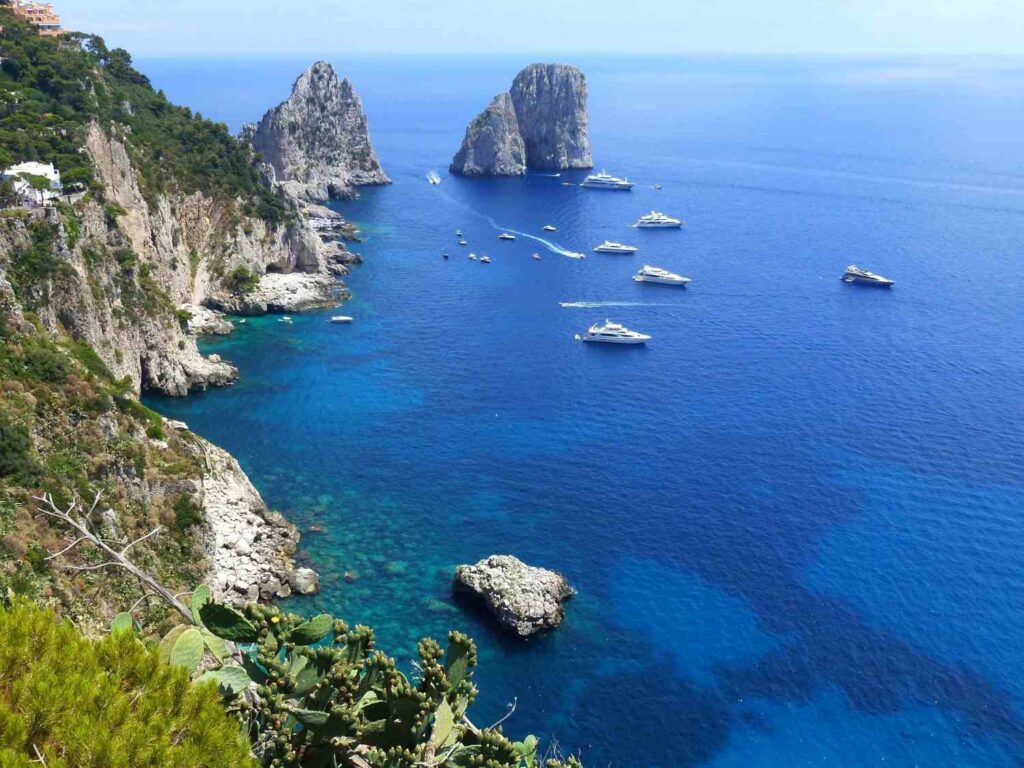
Once on the island, the Gardens of Augustus offer stunning views of the famous Faraglioni rock formations — a short walk from the main town and easy to do with children. In Anacapri, the chairlift to Mount Solaro (589 metres above sea level) is a highlight — the views from the top are extraordinary. One important note for families: the chairs are single-passenger and not suitable for very young or wriggly children who might try to lift the safety bar. Fine for older, sensible children; not for toddlers.
If time allows, a two-hour boat tour around Capri takes in the famous grottos, the Faraglioni rocks, the natural stone arch (Arco Naturale), and the Punta Carena lighthouse with a stop for swimming along the way. One of the most memorable ways to spend an afternoon on the water.
A Day Trip to Pompeii
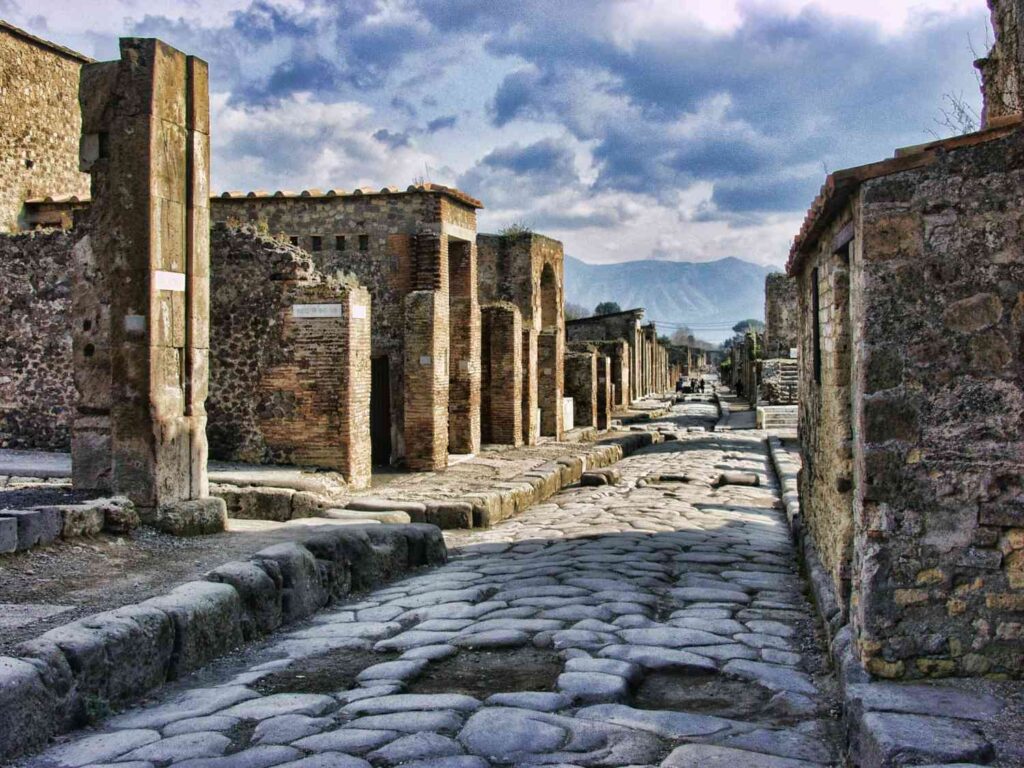
Just a short distance from the Amalfi Coast lies Pompeii — and if you’re travelling with children aged 8 and above, it deserves a place on your itinerary.
The ancient Roman city, buried by the eruption of Mount Vesuvius in 79 AD and preserved almost perfectly under volcanic ash, is one of the most extraordinary historical sites in the world. With the right guide it becomes one of those rare travel experiences that children genuinely remember for years.
If you’re flying into Naples, Pompeii makes a perfect stop en route to the coast — it’s directly on the way. Alternatively, the train from Sorrento to Pompeii is direct, quick, and drops you a two-minute walk from the entrance.
👉 I’ve written a full guide to visiting Pompeii with kids — including why a private guide makes all the difference, what children love most, and all the practical tips. Read it here.
Where to Stay on the Amalfi Coast with Kids
I’d skip Naples as a base entirely. It’s the most practical option on paper — closest to the airport, easy transport links — but it’s a busy, chaotic city and not the relaxing family base most parents are hoping for. Instead, base yourself on the coast. You came for the Amalfi Coast so stay on it.
Sorrento is my top recommendation for families. It sits just outside the official Amalfi Coast but has excellent transport connections, including the direct train to Pompeii, which takes just a few minutes and drops you right at the site entrance. It’s more accessible than the cliffside towns, has a wider range of accommodation, and is a beautiful base in its own right.
For families wanting to be right on the coast, Maiori and Minori are the most family-friendly towns with flatter terrain, less crowded, and a more relaxed atmosphere than Positano or Amalfi.
👉 Browse family-friendly hotels on the Amalfi Coast on Booking.com
Practical Tips for Visiting the Amalfi Coast with Kids
Go in shoulder season. Late May, early June, or September. The crowds are thinner, the heat is more manageable, and the coast is significantly more enjoyable for families.
Use ferries, not buses. Between towns, ferries are far more pleasant with children — no winding roads, great views, and no motion sickness risk.
One town per day. Don’t try to pack in too much. The walking and heat add up faster than you expect, especially with children.
Book restaurants early. Good restaurants fill up quickly, particularly in high season. Book ahead to avoid the stress of wandering with hungry children looking for somewhere to sit.
Water shoes are non-negotiable. For every beach, for every child and adult. The pebbles are painful and get extremely hot in the sun.
Pack light for day trips. Every extra kilogram feels heavier on those stairs. A small backpack per person is far more practical than a large family bag.
Don’t bring a stroller if you can help it. A carrier is significantly more practical on the Amalfi Coast. If you do bring a stroller, make sure it’s lightweight — you will be carrying it.
Final Thoughts
The Amalfi Coast is one of the most beautiful places I have ever been. That’s my honest summary. It’s not a destination to avoid with kids. It’s a destination to time right.
Go when they’re old enough to walk without a stroller, old enough to be careful on steep steps without constant supervision, old enough to sit on a boat and look out at the sea and understand that they’re somewhere extraordinary. Go when they’re old enough to remember it.
Then it becomes something else entirely — one of those family trips that stays with everyone for a long time.
More Posts on Italy with Kids
Pompeii with Kids: How to Visit + Why You Need a Guide – practical tips to make the visit work for families.
Florence with Kids: How We Spent 4 Days in the City – detailed itineraries and tips.
Venice with Kids: What to See, Do and Skip in 4 Days – detailed itineraries and tips.
Doing a Day Trip from Venice with Kids: Murano, Burano & Torcello – what’s different about the islands and which ones to visit.
Disclosure: This post contains affiliate links and I receive a commission if you visit a link and buy something on my recommendation. Purchasing via an affiliate link doesn’t cost you any extra, and I only recommend products and services I trust. All opinions are my own. For more details see my disclaimer and privacy policy.